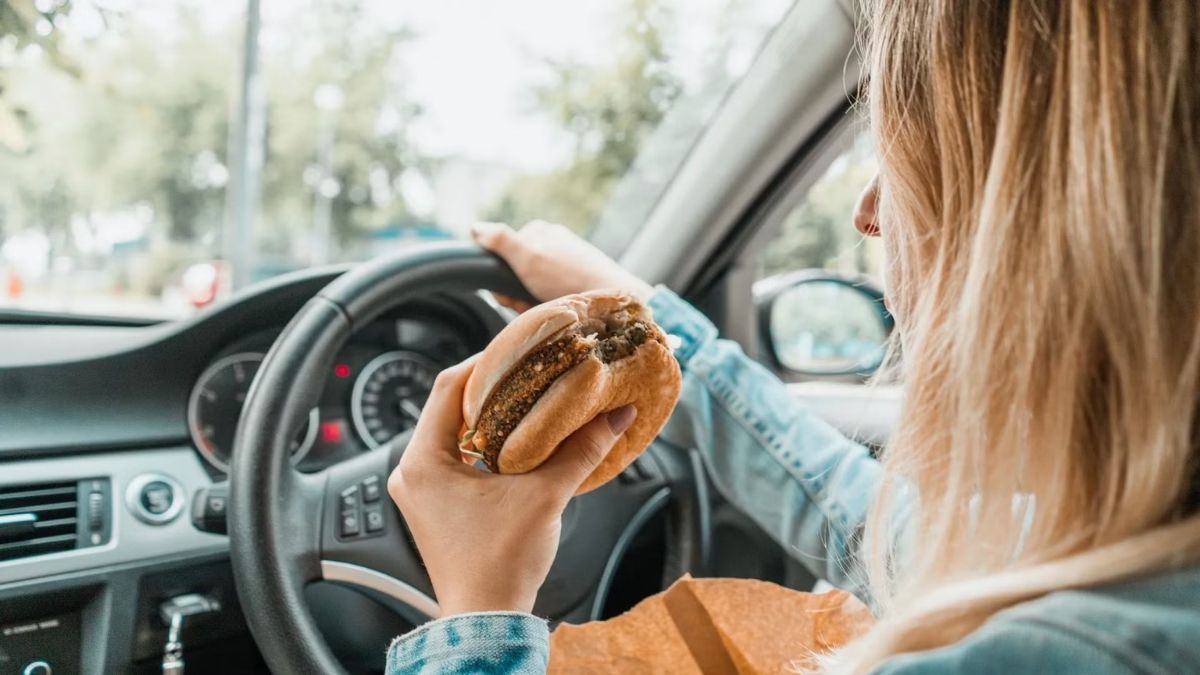
Canada Tightens Rules : Motorists across Canada are being warned that eating while driving may now result in significant penalties if it interferes with safe vehicle control. Police forces and transportation authorities say stricter enforcement of distracted driving laws means drivers who handle food or drinks behind the wheel could face fines ranging from several hundred dollars to as much as $10,000 in serious cases, particularly if the distraction contributes to a collision.
The increased enforcement comes as governments and road safety agencies attempt to curb accidents linked to distracted driving — a leading cause of traffic injuries nationwide. While there is no national law explicitly banning eating while driving, authorities say the behaviour can fall under broader distracted driving rules if it takes a driver’s eyes, hands or attention away from the road.
Why Police Are Targeting Food-Related Distractions
Road safety officials say distracted driving remains one of the most persistent causes of collisions in Canada.

Data compiled by transportation authorities and analyzed by departments such as Transport Canada shows that distraction — including mobile phone use and other in-vehicle activities — contributes to thousands of crashes every year.
Although smartphone use often receives the most attention, safety experts say everyday behaviours like eating, drinking or adjusting items inside the vehicle can create similar risks.
Handling food can lead to:
Read Also:
 Canada Slashes Immigration Rules in 2026 – What It Means for Students, Workers, and Families
- Reduced reaction time when traffic conditions change
- Drivers steering with only one hand
- Looking down or away from the roadway
- Difficulty responding quickly to pedestrians, cyclists or sudden hazards
Law enforcement agencies say even a brief lapse in attention can be enough to cause a collision.
Distracted Driving Laws Already Allow Tickets for Eating
Canada does not have a single federal distracted driving statute. Instead, road safety regulations are enforced at the provincial and territorial level, typically under highway traffic legislation.
However, these laws generally prohibit any activity that impairs a driver’s ability to operate a vehicle safely.

Police can therefore issue a ticket if they determine that eating while driving compromises vehicle control.
Enforcement agencies say drivers may face penalties if they are observed:
- Steering with one hand while holding food
- Unwrapping meals or reaching into bags
- Looking down to handle drinks or snacks
- Losing lane control or failing to react to traffic conditions
The key factor in most cases is whether the behaviour interfered with safe driving.
Read Also:
 Canada Extends Policy Allowing Foreign Workers to Change Employers Before Work Permit Approval
Potential Fines and Penalties Across Canada
Penalties vary widely depending on the province, the seriousness of the offence and whether the driver has prior violations.
Typical consequences for distracted driving related to food handling may include:
| Violation | Typical Fine Range | Possible Additional Penalties |
|---|---|---|
| Minor distraction involving food or drink | $300 – $1,000 | Demerit points, warning ticket |
| Repeat offences | $1,000 – $3,000 | Increased demerit points, potential licence suspension |
| Unsafe driving linked to distraction | $3,000 – $5,000 | Insurance increases, court penalties |
| Collision caused by distracted driving | Up to $10,000 | Licence suspension, court proceedings, possible criminal charges |
Insurance providers may also raise premiums significantly following a distracted driving conviction.

How Police Are Enforcing the Rules
Law enforcement agencies across Canada have expanded monitoring of distracted driving behaviour.
Officers are increasingly using a combination of enforcement methods, including:
- Unmarked police vehicles monitoring driver behaviour in traffic
- Observation points on busy urban roads and highways
- Post-collision investigations examining possible distractions
- Dashcam footage and witness statements to support charges
Traffic officers are trained to watch for signs of distraction such as looking down, holding objects in one hand or drifting between lanes.

In many cases, distracted driving citations are issued based on an officer’s direct observation.
Why Enforcement Is Increasing Now
Government officials say the stronger enforcement is part of broader road safety strategies being implemented by federal and provincial authorities.
Departments such as Transport Canada work with provincial ministries of transportation and law enforcement agencies to reduce preventable road deaths.

Authorities say distracted driving has become more complex in recent years due to the rise of smartphones, in-vehicle technology and multitasking behind the wheel.
Officials argue that addressing everyday habits — including eating while driving — is necessary to improve road safety.
What This Means for Canadian Drivers
For drivers, the message from law enforcement is straightforward: any activity that interferes with driving could result in a ticket.
Even if eating itself is not illegal, police may issue a distracted driving charge if the behaviour causes unsafe driving.
Drivers are advised to:
- Eat before starting a trip whenever possible
- Pull over safely if they need to eat or drink during a journey
- Keep both hands on the wheel and eyes on the road
Road safety advocates say small changes in driving habits can significantly reduce crash risk.
Practical Safety Advice for Motorists
Transportation safety experts recommend several strategies to avoid distracted driving violations:
- Finish meals before getting behind the wheel
- Avoid opening food containers while driving
- Plan rest stops during long trips
- Keep beverages secured and within easy reach if necessary
- Focus entirely on driving during busy traffic conditions
These steps can help reduce both legal risk and the likelihood of collisions.
Frequently Asked Questions
Is eating while driving illegal in Canada?
No. Eating while driving is not explicitly banned nationwide. However, drivers can still receive a distracted driving ticket if the behaviour interferes with safe vehicle operation.
What is the maximum fine for distracted driving related to eating?
In serious cases — particularly when a collision occurs — penalties can reach up to $10,000, along with potential licence suspension and court action.
Can police issue a ticket just for holding food?
Yes. If an officer believes that handling food affects your ability to drive safely, it may qualify as distracted driving under provincial highway traffic laws.
Are these new laws?
No. The legal framework has largely remained the same, but enforcement has intensified as authorities attempt to reduce road accidents caused by distractions.
What is the safest way to avoid distracted driving penalties?
The safest approach is to eat only when parked. Pulling over at a rest stop or parking area eliminates the risk of distraction and potential fines.